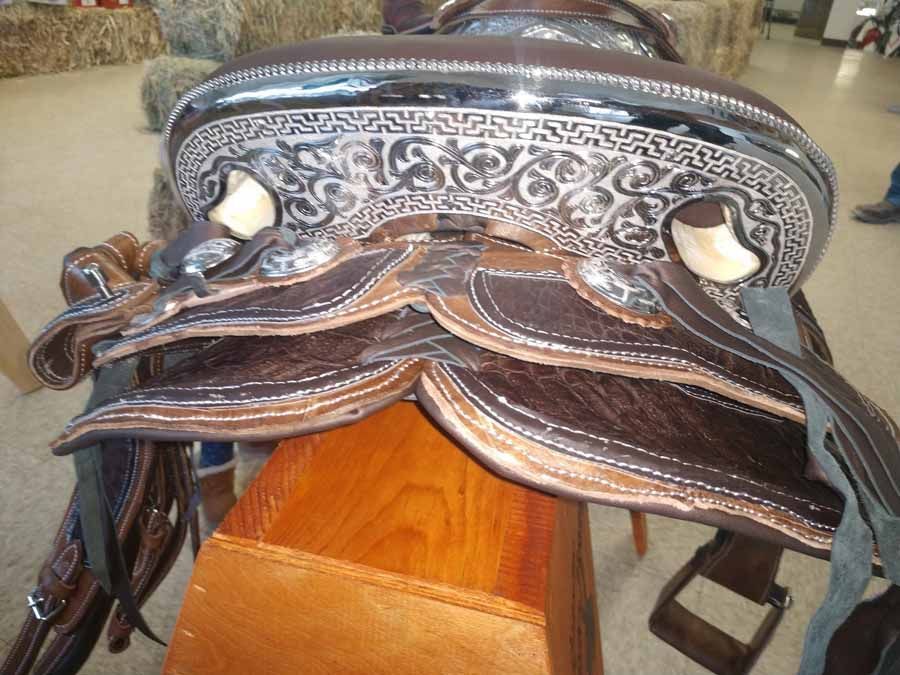
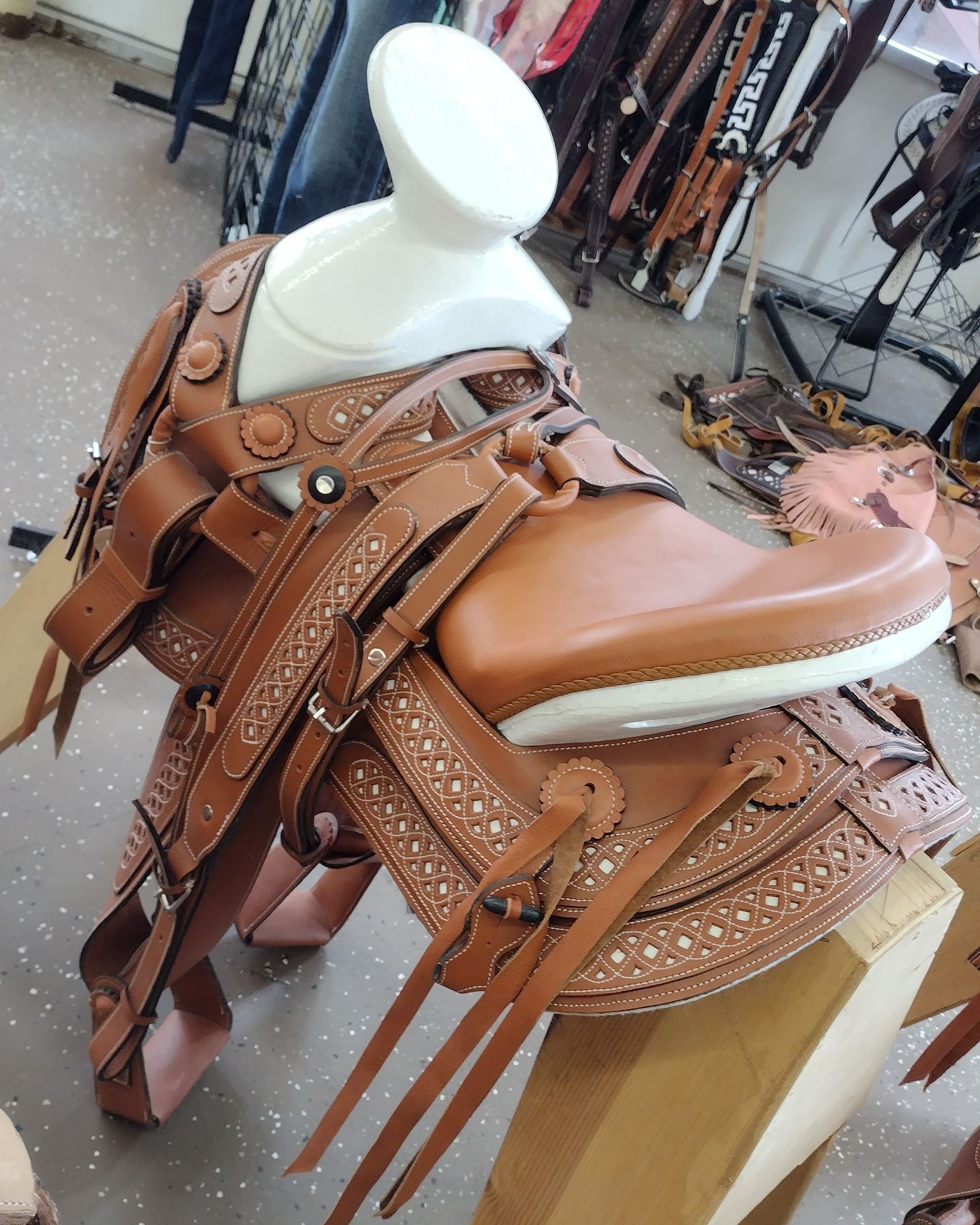
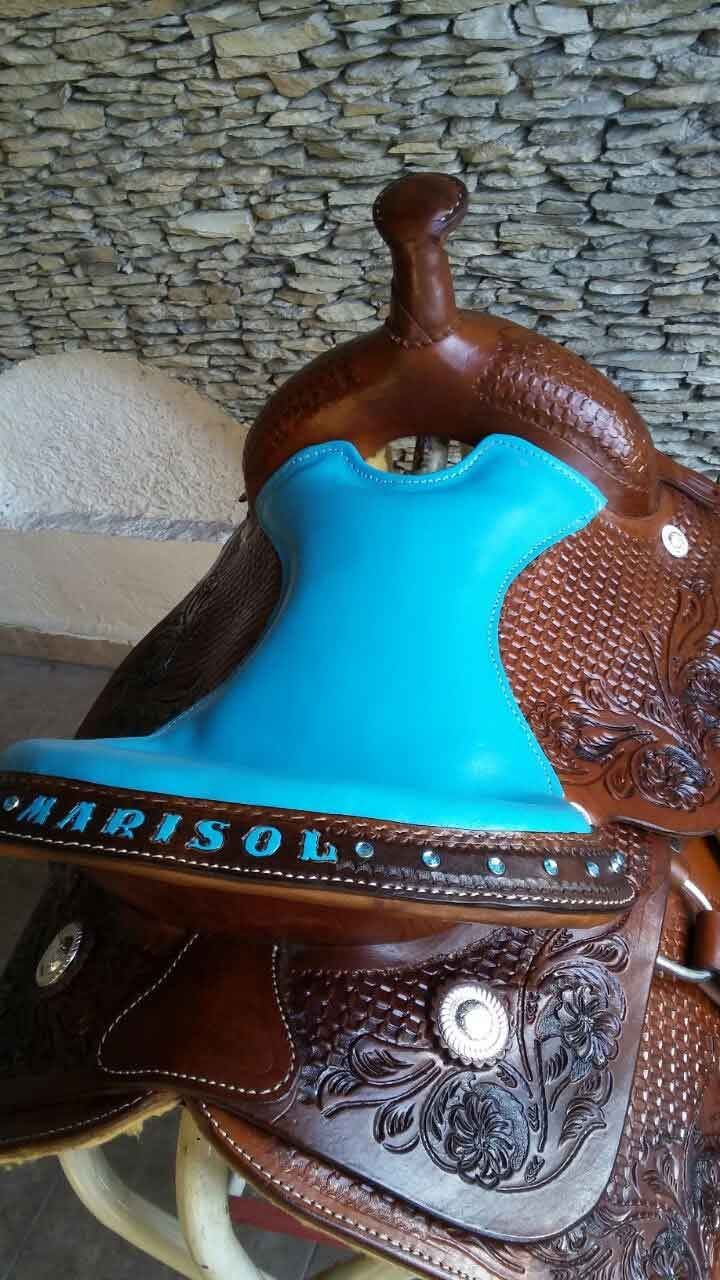
Saddles and Horse Tack in Midland for ranchers and riders who need functional gear for working livestock and regular riding
Ranch work in West Texas involves riding for hours across rough terrain, working cattle through pens and chutes, and roping livestock that puts hundreds of pounds of sudden force on saddle rigging. El Rancho Boots carries saddles and horse tack constructed to handle these specific demands without the excessive weight and decorative tooling found on show saddles that compromise function for appearance. The inventory focuses on working saddles with reinforced trees, properly positioned rigging rings, and leather quality that withstands daily use in the agricultural and equestrian communities around Midland and Odessa.
Working saddles distribute rider weight across the horse's back through a rigid tree structure, typically made from wood or synthetic materials covered with rawhide, that prevents pressure points during extended riding. The rigging system that attaches the saddle to the horse must be positioned correctly for the specific work being done, with full double rigging providing the stability needed for roping while three-quarter rigging works better for general riding where less forward pull occurs. Tack items include bridles, reins, breast collars, and cinches made from leather and hardware that won't fail under the stress of controlling a thousand-pound animal.
Come by the store to evaluate saddle fit and weight, since these factors determine whether the equipment works for both you and your horse during actual use.
What Separates Functional from Decorative Saddles
Functional saddles prioritize structural strength and rider comfort over appearance, using thick leather for stirrup leathers and fenders that won't stretch or break, and heavy-duty hardware that stays secured when force is applied to the horn during roping. The seat must be shaped to support the rider's position during different tasks, from trotting across pastures to sitting deep during cutting work, without creating pressure points that cause fatigue during six-hour rides. Saddle weight typically ranges from thirty to forty-five pounds depending on tree size and leather thickness, with lighter saddles reducing horse fatigue but potentially sacrificing durability for hard daily use.
After you start using properly constructed working tack, you notice that equipment stays positioned correctly on the horse without constant adjustment, leather maintains its strength and flexibility through exposure to sweat and weather, and hardware functions reliably rather than bending or breaking at critical moments. El Rancho Boots stocks saddles in different seat sizes and tree widths to match various rider and horse builds, since improper fit creates soreness for both partners regardless of how well the saddle is constructed.
Tack selection includes bits appropriate for different training levels and riding styles, split reins and closed reins for different handling preferences, and cinches made from materials that resist rot from constant moisture exposure. The store carries both new and used saddles, with used options providing access to quality equipment at lower initial cost for riders who need functional gear without premium pricing. Staff can explain the differences between saddle styles like roping, cutting, and ranch versatility saddles based on your primary use.
Questions Ranchers Ask About Saddles
Riders in the Permian Basin frequently need guidance on saddle selection since the wrong equipment creates problems for both horse and rider throughout the workday.
What saddle tree width fits different horses?
Tree width must match the horse's wither and shoulder conformation, with quarter bars typically measuring six to six and a half inches between the bars at the front for most stock horses, while narrower or wider options accommodate horses with different builds common in various breeds.
How does rigging position affect saddle performance?
Full double rigging places front and rear cinch attachment points forward on the saddle for maximum stability during roping, while three-quarter rigging positions the front dee rings slightly back to reduce forward pull during general riding where heavy roping work isn't performed regularly around ranches in this region.
Why do saddle prices vary significantly?
Price differences reflect leather quality, tree construction methods, hardware durability, and the amount of hand tooling or decoration included, with basic working saddles starting around eight hundred dollars while heavily tooled or custom-fit saddles can exceed several thousand dollars depending on specifications.
When should saddles be replaced rather than repaired?
Replace saddles when the tree cracks or breaks, when stirrup leather attachment points tear out of the saddle body, or when the leather deteriorates so badly that structural integrity becomes compromised and creates safety risks during riding.
What tack maintenance prevents premature failure?
Regular cleaning to remove salt and sweat deposits, conditioning to maintain leather flexibility, and inspection of stitching and hardware before each use prevents most tack failures that occur during work and identifies problems before they create dangerous situations while riding.
El Rancho Boots maintains saddles and tack suited for working ranches where equipment needs to perform reliably rather than serve primarily as display pieces. Visit either location to sit in different saddles and evaluate fit before making a purchase decision that affects your comfort and effectiveness throughout years of riding.